01
Developing an Informal-Formal Persian Corpus: Highlighting the Differences between Two Writing Styles
Vahide Tajalli, Mehrnoush Shamsfard and Fateme Kalantari
The inaugural AbjadNLP workshop brought together researchers working on Arabic, Perso-Arabic and Ajami languages, creating a dedicated forum for language technology across one of the world's most widely used script traditions.
AbjadNLP was established to advance Natural Language Processing for languages that use Arabic-derived writing systems. The first edition deliberately reached beyond Arabic to include Perso-Arabic and Ajami traditions, creating a shared research space for languages that face related challenges in orthography, digital resources, representation and tooling.
The workshop focused on the linguistic structures, resources and technical challenges of these languages, while bringing together researchers from NLP, linguistics, writing systems and language-resource communities. It also highlighted links with the Masakhane NLP community, COMSATS and Lancaster University's UCREL NLP Group.
The name AbjadNLP is used as an inclusive umbrella. The workshop has always recognised that the wider scope includes languages using Arabic and Perso-Arabic alphabets, as well as Ajami writing traditions, and that not every language within this community is technically written using an abjad.
Modern Standard Arabic, dialects, historical language varieties and Arabic NLP.
Persian, Urdu, Pashto, Sorani Kurdish, Sindhi, Uyghur and related writing traditions.
African languages written using Arabic-derived scripts, including Hausa, Fulfulde, Wolofal, Swahili, Kanuri, Mandingo and Tamazight.
The original call combined core NLP, writing-system technology, resources and culturally grounded language technology.
Morphology, tokenisation, POS tagging, named entities, parsing, semantic role labelling, sentiment and language modelling.
Machine translation, speech recognition and synthesis, OCR, pedagogy, assistive technologies and social media analysis.
Dictionaries, annotated datasets, corpora, BLARK descriptions and open-access resources.
Orthography descriptions, font technology, glyph rendering, Unicode, text input and spell-checking.
Text processing across Arabic-derived scripts, transliteration and morphology-aware approaches.
Cultural and sociolinguistic considerations for inclusive NLP applications and language preservation.
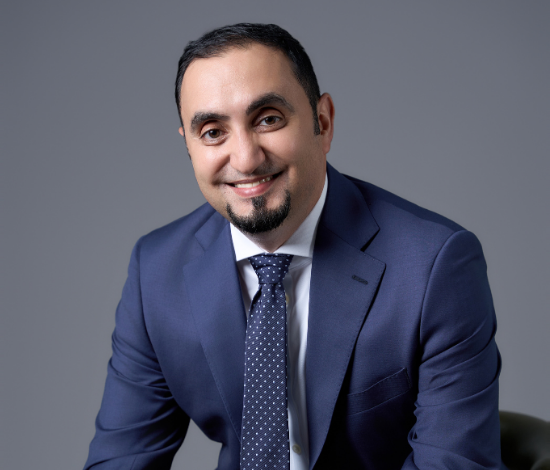
Vahide Tajalli, Mehrnoush Shamsfard and Fateme Kalantari
Sadegh Jafari, Farhan Farsi, Navid Ebrahimi, Mohamad Bagher Sajadi and Sauleh Eetemadi
Srihari Bandarupalli, Bhavana Akkiraju, Sri Charan Devarakonda, Harinie Sivaramasethu, Vamshiraghusimha Narasinga and Anil Vuppala
Abdulsalam Obaid Alharbi, Abdullah Alsuhaibani, Abdulrahman Abdullah Alalawi, Usman Naseem, Shoaib Jameel, Salil Kanhere and Imran Razzak
Ayushman Gupta, Aryan Singhal, Thomas Law, Veekshith Rao, Evan Duan and Ryan Luo Li
Silvana Yakhni and Ali Chehab
Masoumeh Mohammadi, Mohammad Ruhul Amin and Shadi Tavakoli
Mounes Zaval, Abdullah İhsanoğlu, Asım Ersoy and Olcay Taner Yıldız
Reham Marzouk, Sondos Krouna and Nizar Habash
Asma Ali Al Wazrah, Afrah Altamimi, Hawra Aljasim, Waad Alshammari, Rawan Al-Matham, Omar Elnashar, Mohamed Amin and Abdulrahman AlOsaimy
Raghad Al-Rasheed, Abdullah Al Muaddi, Hawra Aljasim, Rawan Al-Matham, Muneera Alhoshan, Asma Al Wazrah and Abdulrahman AlOsaimy
Haq Nawaz, Manal Elobaid, Ali Al-Laith and Saif Ullah
Sadegh Jafari, Mohammad Erfan Zare, Amireza Vishte, Mirzae Melike, Zahra Amiri, Sima Mohammadparast and Sauleh Eetemadi
Farizeh Aldabbas, Shaina Ashraf, Rafet Sifa and Lucie Flek
Ngoc Tan Le, Ali Mijiyawa, Abdoulahat Leye and Fatiha Sadat
The inaugural workshop was organised by an international team spanning NLP, linguistics, writing systems and low-resource language research.
AbjadNLP 2025 established the workshop series and its broad community focus. Later editions continue the same mission while expanding the programme, shared tasks and participation across Arabic-script language communities.
Inaugural edition, co-located with COLING 2025.
Second edition at EACL 2026.
Current edition at EACL 2027.